Last updated: August 10, 2026 · Prices reviewed quarterly
A professional roof inspection costs $100 to $400 in 2026, and most homeowners land near $250. A basic walk-on inspection runs $75 to $200, a drone inspection $100 to $450, and an infrared moisture scan $400 to $600, per Angi and HomeGuide 2026 data. That modest fee buys an early warning: inspectors routinely catch failing flashing, curled shingles and hidden moisture years before they become a four-figure repair.
Roof inspection cost by type in 2026
| Inspection type | Typical cost | Best for |
|---|---|---|
| Physical (walk-on) | $75 – $200 | Accessible roofs, routine checkups |
| Drone | $100 – $450 | Steep, high or fragile roofs |
| Infrared / thermal | $400 – $600 | Hidden moisture, chronic leaks |
| Roof certification (add-on) | $75 – $200 | Home sales, insurers, lenders |
| Attic inspection (add-on) | $200 – $500 | Ventilation, rot and mold checks |
Source: Angi (July 2026) and HomeGuide (December 2025) cost data. The two publishers report matching ranges for physical, infrared and certification pricing.

Cost breakdown by inspection type
A physical inspection ($75 to $200) is the default. The inspector walks the roof, checks every penetration and flashing line, then looks at the underside from the attic. Angi and HomeGuide both put it in this range, and for most single-story homes with a walkable pitch it is all you need.
A drone inspection ($100 to $450 per HomeGuide; $150 to $400 per Angi) makes sense when the roof is steep, three stories up, or fragile enough that foot traffic would cause damage — think older tile. You pay for the pilot and the camera work, not extra insight.
An infrared scan ($400 to $600 in both sources) finds what eyes cannot: wet insulation and decking hold heat longer than dry material, so trapped moisture lights up on a thermal image. Order one when you have a leak nobody can locate, before it grows into the repair bills we break down in our roof leak repair cost guide.
A roof certification ($75 to $200) is a separate letter stating the roof has useful life left — HomeGuide notes a roof must be leak-free with 2 to 5 years of remaining life to pass, and many mortgage lenders want at least 3 years certified before they approve a loan.
What a roof inspection actually catches
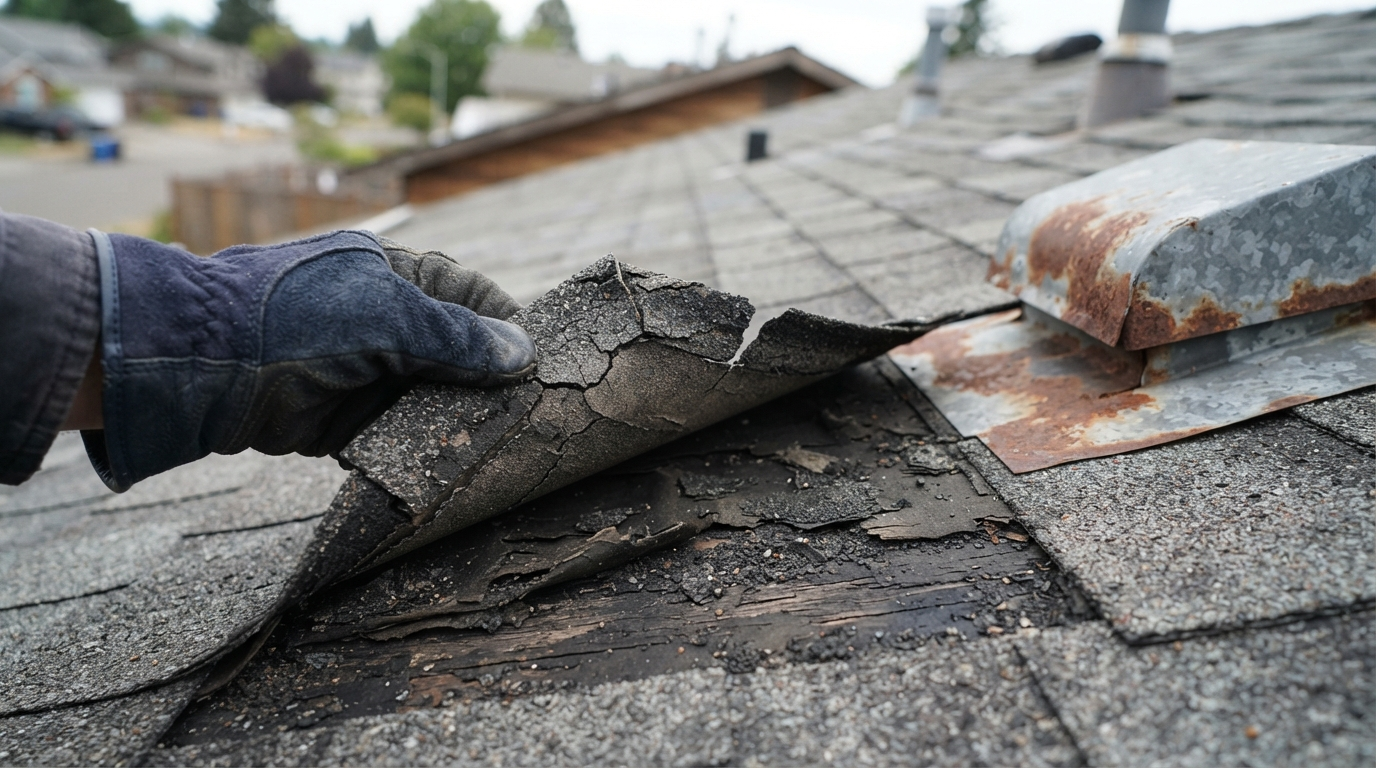
HomeGuide’s inspection checklist groups findings into four buckets: structural issues (sagging, failing chimneys and vents), water intrusion (stains, mold, rot), material condition (curled or missing shingles, cracked caulk, damaged flashing) and work quality (bad nail patterns, cheap underlayment from the last crew).
The deliverable is a 3-to-4-page written report, typically in your inbox 1 to 2 business days later, with photos and a repair estimate. Minor fixes flagged this way average $150 to $1,000 per HomeGuide — catching them early is exactly how you win the repair-versus-replacement math later.
What drives the price up or down
Size. Most inspectors charge a flat fee, but larger roofs cost more. Angi’s 2026 survey data prices a 1,000-square-foot roof at $75 to $210, a 2,000-square-foot roof at $150 to $420, and a 3,000-square-foot roof at $225 to $630.
Region. Angi reports the Southwest averaging just $130 to $160 while West Coast inspections run $250 to $1,200 — coastal labor rates and complex older housing stock drive the spread.
Pitch, access and material. A steep or multi-story roof pushes you into drone territory, and specialty materials cost more to evaluate — slate and tile need inspectors who know them, and metal roofs have their own fastener and seam checklist. Winter inspections also cost more where snow makes walking hazardous.
DIY vs. hiring a pro
Do the free part yourself: scan the roof from the ground with binoculars twice a year, glance at the attic after heavy rain, and watch for granules collecting in gutters. That habit costs nothing and tells you when to call someone.
Skip walking the roof yourself. Falls are the obvious risk, foot traffic damages shingles and tile, and an untrained eye misses early flashing and fastener failures. A pro’s written report also carries weight with your insurer that your own photos will not — see how documentation decides hail damage roof claims.
How to save money
Bundle it with a repair quote. Most roofing contractors fold a basic inspection into a free estimate when you already know work is coming. Just understand the limits: a contractor’s free look-over usually will not satisfy a lender or insurer that demands a formal certification.
Treat unsolicited free inspections as a red flag. Both Angi and HomeGuide warn about storm chasers who knock after severe weather, “find” damage on every roof, and inflate insurance claims. A free inspection you requested from an established local company is fine; one that shows up uninvited is not.
Stay on schedule. Routine inspections plus small fixes ($400 to $1,800 for typical repairs, per Angi) are what keep you away from an average $9,000 roof replacement years ahead of schedule. Get three quotes for the same inspection type before booking, and pay only after the written report arrives.
Where these numbers come from
We compiled the ranges above from Angi’s July 2026 cost data (based on surveyed member projects), HomeGuide’s December 2025 pricing research, HomeAdvisor’s inspector cost data, and This Old House’s inspection guidance citing the National Roofing Contractors Association. Where only one source supports a figure, we name it inline.
Official resources & free help
- Ready.gov — federal guidance on preparing your roof and home for hurricanes and severe weather: ready.gov
- FEMA disaster assistance — help after a declared disaster damages your roof: DisasterAssistance.gov or 1-800-621-3362
- NAIC — find your state insurance department to get help with a wind or hail claim dispute: naic.org
- DOE Energy Saver — attic insulation and ventilation guidance for the issues inspections flag: energy.gov/energysaver
- 211 — dial 211 to ask about local home repair assistance programs for qualifying homeowners
Frequently asked questions
What do roof inspectors look for?
Structural problems, water intrusion, failing materials and poor workmanship — on the roof surface and inside the attic. That covers missing or curled shingles, damaged flashing, loose chimneys and vents, sagging decking, gutter condition and any staining, mold or rot underneath.
Are roof inspections free?
Sometimes. Contractors often include a basic inspection with a repair estimate, and insurers order no-cost inspections when investigating a claim. A free contractor inspection rarely satisfies lender or insurance certification requirements, and an unsolicited free offer after a storm is a classic scam opener.
How long does a roof inspection take?
Roughly 45 minutes to a few hours depending on roof size and damage, per HomeGuide. A certification-only visit can wrap in 30 to 60 minutes. Expect the written report 1 to 2 business days later.
How often should I get a roof inspection?
The National Roofing Contractors Association recommends self-checks twice a year — spring and fall — plus after any severe weather event. For professional visits, HomeGuide suggests every 3 years for shingle roofs and every 5 for tile, moving to annual once a roof passes 15 years or sits in a harsh climate.
Does a home inspection include the roof?
Partially. A general home inspection ($250 to $400 per HomeGuide) covers a limited visual look at the roof, often from the ground or eaves. A dedicated roof inspection goes further — walking the surface, checking every penetration and documenting remaining lifespan — and only it supports a formal certification.
Prices on this page are researched estimates compiled from the cited sources; your local costs will vary with market, access and scope. Always get multiple written quotes from licensed professionals before hiring.