Last updated: August 21, 2026 · Prices reviewed quarterly
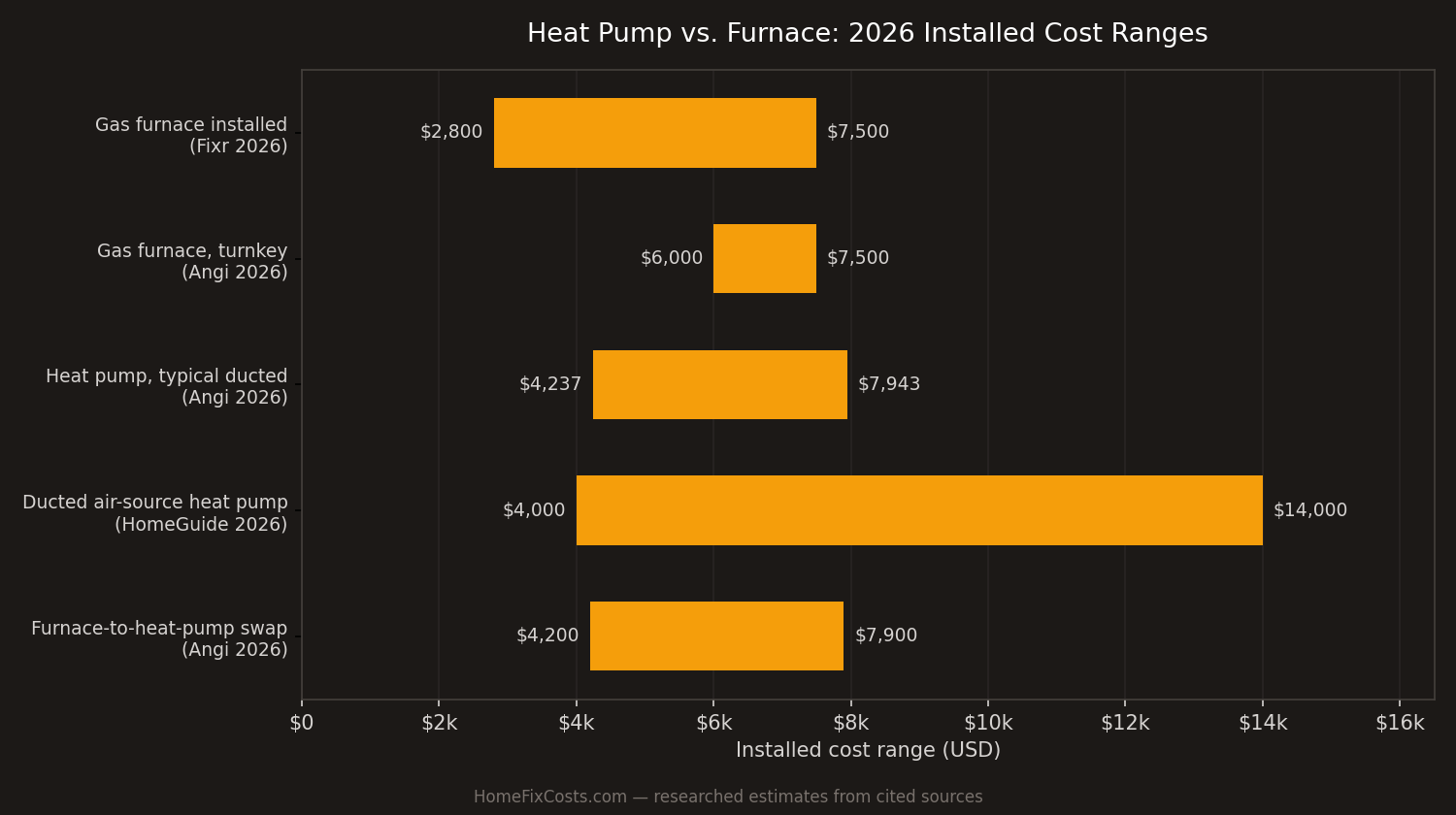
If your heating system is dying and you have to pick, here is the short version: a new gas furnace runs $2,800 to $7,500 installed per Fixr’s 2026 data, while a typical ducted heat pump lands at $4,237 to $7,943 per Angi. The heat pump costs more upfront — but it replaces your furnace and your air conditioner in one box, which changes the math for most homes that also need cooling.
The Verdict in Two Sentences
If your AC is also near the end of its life, or you live anywhere south of the snow belt, the heat pump usually wins the 10-year math — one install instead of two, and lower operating costs in most climates per EnergySage. If you have cheap natural gas, brutal winters, and a working AC you plan to keep, a straight furnace swap is still the cheaper, simpler call.
Heat Pump vs. Furnace: 2026 Installed Costs
| System option | Typical installed cost (2026) | Source |
|---|---|---|
| Gas furnace, installed | $2,800 – $7,500 (avg. $4,800) | Fixr 2026 data |
| Gas furnace, turnkey with labor | $6,000 – $7,500 | Angi 2026 data |
| Ducted heat pump, typical | $4,237 – $7,943 (avg. $6,087) | Angi 2026 data |
| Ducted air-source heat pump, full range | $4,000 – $14,000 | HomeGuide 2026 data |
| Furnace + separate new AC | $5,000 – $9,000 | HomeGuide 2026 data |
| Swap gas furnace for a heat pump | $4,200 – $7,900 (avg. ~$6,000) | Angi 2026 data |
When a Heat Pump Makes Sense
The strongest case is a home that needs heating and cooling replaced within a few years. Buying a furnace plus a separate AC runs $5,000 to $9,000 per HomeGuide — at that point a $6,000 heat pump is not a premium, it is a discount. See our full heat pump installation cost guide for sizing and brand pricing.
Heat pumps also win on running costs in most of the country. Because they move heat instead of burning fuel, they are up to three times more efficient than a gas furnace per EnergySage. Modern cold-climate models from Mitsubishi, Daikin and Bosch keep working down to -15°F and lower, a point HVAC.com makes when debunking the “heat pumps die below freezing” myth.
One more 2026 reality: the federal 25C efficiency credit expired on December 31, 2025, so there is no federal tax credit behind either system this year. State and utility rebates still exist and can be substantial — check your ZIP code on DSIRE before you sign anything.
When a Furnace Makes Sense
Stick with gas if three things line up: your winters regularly dip below zero, your natural gas is cheap, and your existing AC has years left. HVAC.com notes gas furnaces can still be the more economical heat source in very cold regions with inexpensive gas, and they recover indoor temperature faster after a setback.
A furnace is also the budget answer when cash is tight right now. At Fixr’s $4,800 average — and with no electrical panel work, no refrigerant lines, no outdoor unit — it is the least disruptive like-for-like swap. Our furnace replacement cost guide breaks down gas vs. electric pricing in detail.
Lifespan tilts slightly toward the furnace too: 15 to 20 years against roughly 15 for a heat pump per EnergySage, because the heat pump works year-round doing both jobs.
The Cost Difference in Real Numbers
Upfront, the gap between a typical furnace and a typical heat pump is roughly $1,000 to $2,000 on Angi’s 2026 averages ($4,800 vs. $6,087). Add a needed AC replacement to the furnace side and the heat pump comes out $1,000 to $3,000 ahead on day one.
On monthly bills, the answer depends on your utility rates. The rule of thumb: when electricity costs less than about 3.5 times your gas price per equivalent unit of heat, the heat pump wins on operating cost. In mild and mixed climates that is the norm; in gas-cheap northern markets it can flip.
Timing matters more than most homeowners expect. HVAC shops discount shoulder-season work — spring and early fall — because crews sit idle between cooling and heating rushes. Replacing a limping furnace in October, mid-panic, is how people end up at the top of every price range on this page. If your system is past 12 years old, get quotes now, on your schedule, not the weather’s.
Do not forget the ducts in either scenario. If yours leak or are undersized, budget for repairs first — our ductwork replacement cost guide shows why bad ducts quietly eat 20-30% of any system’s output.
What the Pros Say
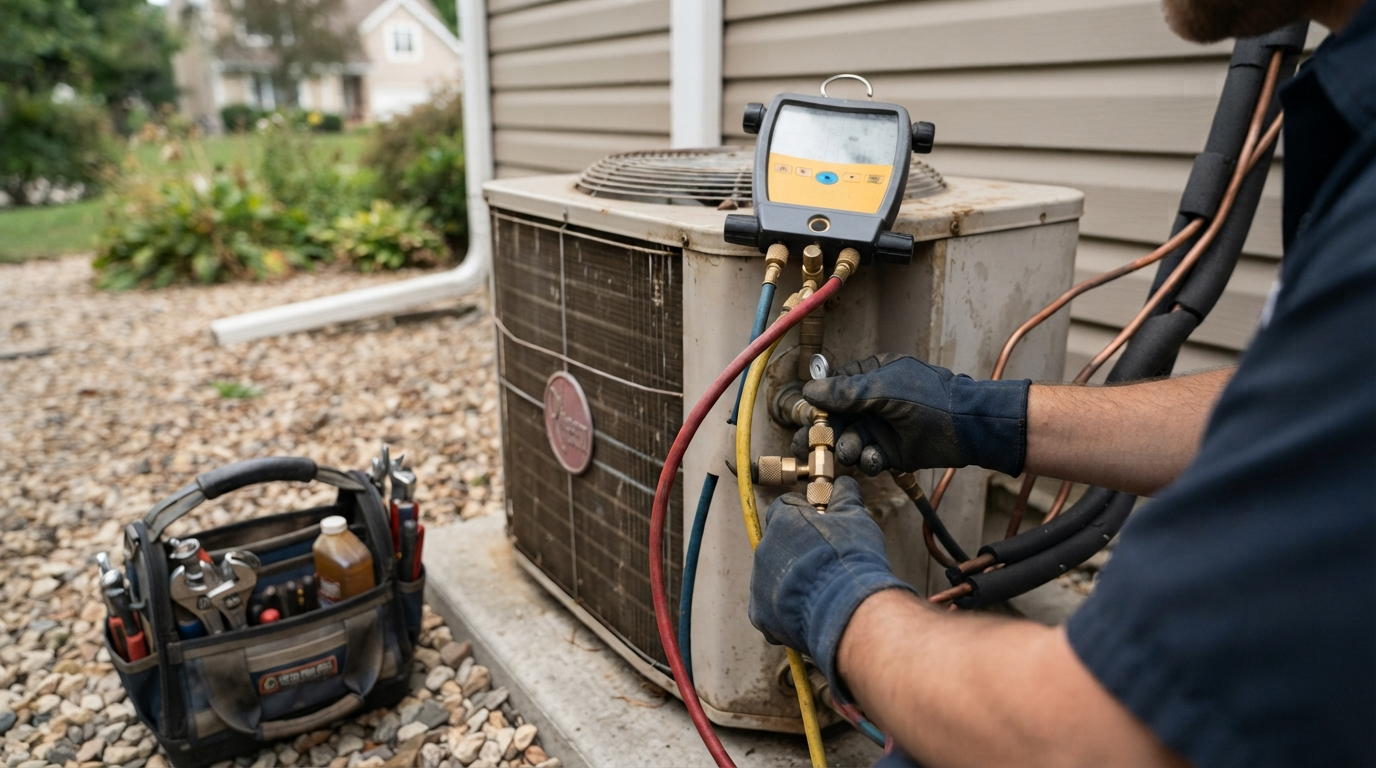
Installers consistently push one option many homeowners skip past: dual fuel. Pairing a heat pump with a small gas furnace as backup lets the heat pump carry the mild 80% of the season while gas handles the deep-freeze days — a setup HVAC.com and Carrier both recommend for mixed-cold climates.
Pros also warn against sizing by rule of thumb. An oversized heat pump short-cycles and an oversized furnace roasts one floor while the basement freezes. Insist on a Manual J load calculation in writing, and get three quotes — the spread between bids on identical equipment routinely tops $2,000. If you are weighing whether your current AC is worth saving in this decision, our AC repair vs. replacement guide covers that math, and the full HVAC system replacement guide prices the all-in route.
Official resources & free help
- DOE Energy Saver — unbiased guidance on heat pump types and sizing
- ENERGY STAR — certified heat pump and furnace product lists
- DSIRE — every state and utility rebate, searchable by ZIP
- LIHEAP — help paying heating bills: 1-866-674-6327
- 211 — local emergency heating assistance: dial 211
Frequently asked questions
Do heat pumps work below freezing?
Yes. Standard models lose efficiency in deep cold, but modern cold-climate heat pumps are rated to -15°F and some to -22°F per HVAC.com. Below their cutoff they lean on electric backup strips, which is where a dual-fuel setup saves money.
Is it cheaper to run a heat pump or a gas furnace?
In most U.S. climates the heat pump costs less to run because it is up to three times more efficient per EnergySage. Gas can win where winters are severe and gas rates are unusually low — compare your own utility rates before deciding.
Is it worth it to replace a gas furnace with a heat pump?
Angi puts the swap at $4,200 to $7,900. It is most worth it when your AC also needs replacing, when your electric rates are moderate, or when state rebates cut the upfront gap. It is least worth it with a young furnace and cheap gas.
What lasts longer, a heat pump or a furnace?
A gas furnace typically lasts 15 to 20 years; a heat pump about 15, per EnergySage — largely because the heat pump runs year-round handling both heating and cooling.
Can a heat pump replace both my furnace and my AC?
Yes — that is its core advantage. One outdoor unit and one air handler heat and cool the whole house, which is why the fair price comparison is heat pump vs. furnace plus AC, not furnace alone.
Prices on this page are researched estimates compiled from the cited sources; your local costs will vary with market, access and scope. Always get multiple written quotes from licensed professionals before hiring.