Last updated: August 19, 2026 · Prices reviewed quarterly
Hiring a mice exterminator costs $150 to $550 for a standard treatment, with most homeowners paying about $350, per This Old House’s 2026 pricing data. Fixr puts the national average at $362. But the treatment is only half the job: the exclusion work that actually keeps mice out — sealing the gaps they use to get in — typically runs another $300 to $1,500. Here is what each level of service costs, what drives the price, and where the money is worth spending.
Mice Exterminator Cost by Scenario
| Scenario | Typical cost (2026) |
|---|---|
| Inspection only | $75–$150 |
| Standard one-time treatment | $150–$550 |
| Full-service plan (traps, sealant, follow-ups) | $450–$780 |
| Rodent exclusion (sealing entry points) | $300–$1,500 |
| Severe infestation (mice inside walls) | $1,200–$2,000+ |
| Whole-home fumigation (rare, extreme cases) | $2,000–$6,000 |
Sources: This Old House, HomeGuide and Fixr 2026 cost data.
Cost Breakdown by Service Level
Inspection: $75–$150
A standalone rodent inspection costs $75 to $150, per HomeGuide. The tech maps droppings, rub marks and entry points, then quotes the real job. Many companies credit the inspection fee toward treatment if you hire them, so ask before you book.
Traps and bait: $150–$550
Setting lethal traps runs $150 to $475, and poison bait stations with monitoring run $300 to $550, according to Fixr. This is the core of most quotes. Bait-heavy programs cost more because they require return visits to check and refill stations.
Full-service plan: $450–$780
A package with consultation, traps, sealant on minor gaps and a follow-up visit averages about $525, with most jobs between $450 and $600 per HomeGuide. Today’s Homeowner puts full-service one-time treatments at $250 to $780 depending on home size. If a quote near $500 includes sealing work, that is usually better value than a $300 quote that only sets traps.
Exclusion work: $300–$1,500
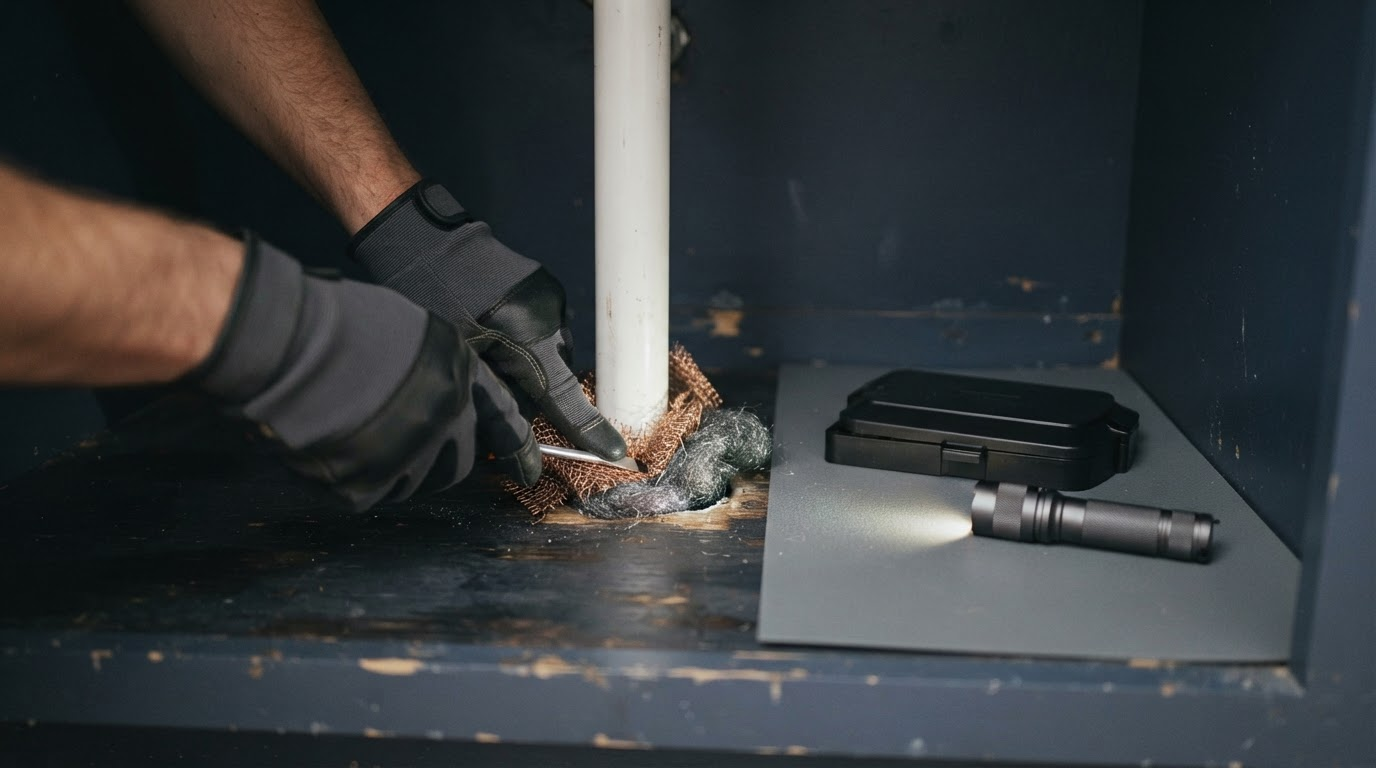
Exclusion is the permanent part: sealing every gap larger than a dime (about 1/4 inch) with steel wool, copper mesh, hardware cloth and metal flashing. Most homes fall between $300 and $1,500 per PestControlPricing’s 2026 guide, and HomeGuide prices a full rodent-eviction plan — exclusion doors on all entry points, repairs and a month of follow-ups — at $600 to $1,400. Individual one-way exclusion doors cost $200 to $400 installed, and simple gap sealing is often billed at $10 to $75 per opening.
Severe infestations: $1,200 and up
Mice nesting inside walls, attics or crawl spaces push costs past $1,200, per This Old House, because the work turns into multiple visits, cut-and-patch access and cleanup of contaminated insulation. Whole-home fumigation — rarely justified for mice — runs $2,000 to $6,000.
Cleanup deserves its own line item on severe jobs. Droppings and nesting material can carry hantavirus, and the CDC’s guidance is specific: never sweep or vacuum dry droppings — wet them with disinfectant first, glove up and bag the material. Pros charge for this sanitation step, and it is one of the better things to pay for rather than DIY in a heavily contaminated attic or crawl space.
What Drives the Price Up or Down
Severity matters most: a few mice in one kitchen run $175 to $300, while an established colony with multiple nests exceeds $1,200, per This Old House. Home size and layout come next — multi-level homes with garages and crawl spaces take longer to inspect and seal. Accessibility is the third lever: an open basement is cheap; wall cavities and tight crawl spaces are not.
Entry-point count drives the exclusion side. A 1,200 sq ft single-story home with 6–8 openings prices very differently than a 3,000 sq ft multi-level with 20+ openings. Get the number of openings in writing on the quote — it is the honest way to compare two exclusion bids.
DIY vs. Hiring a Pro
DIY makes sense for a light problem you caught early: $20–$60 in snap traps and a tube of sealant can end a one-or-two-mouse situation. Where DIY fails is diagnosis — finding all the entry points. Miss one gap and the traps become a subscription.
Hire a pro when you hear scratching in walls, find droppings in more than one room, or the problem returns after your own trapping. Pros are also the right call for rodenticides: baits are regulated, and misplaced bait is a real hazard for kids and pets. If you use any rodenticide yourself, follow the EPA’s bait-station requirements.
Ongoing Plans: When They Pay Off (and When They Don’t)
Companies will push a recurring plan after the initial job. Quarterly pest control visits run $100 to $175 per visit, and monthly rodent monitoring runs $40 to $70, per PestControlPricing’s 2026 plan data drawing on Angi and HomeAdvisor reports. Mouse-specific follow-ups after an initial $125–$300 visit typically cost $50 to $75 each.
A plan earns its keep in older homes, homes bordering fields or woods, and anywhere mice have returned more than once — pressure from outside is constant, so monitoring catches re-entry early. Skip the plan if your home is tight and the infestation traced to one fixable gap. Paid exclusion with a written warranty beats an open-ended subscription in that case.
How to Save Money on Mice Extermination
Get three written quotes and make each one itemize trapping, bait, exclusion and follow-ups separately — bundled single-number quotes hide the markup. Ask whether the inspection fee is credited to the job. Do the cheap prep yourself: clear clutter from the garage and basement, store food in sealed containers, and cut vegetation back from the foundation, which reduces billable labor hours.
Prioritize exclusion over repeat treatments. Paying $600 once to seal a house beats paying $300 for trapping twice a year, and reputable companies back exclusion with a 1–5 year warranty — ask for it in writing. Finally, handle small gaps yourself at material cost: steel wool and caulk cost under $20 at any hardware store, against $10–$75 per opening when a pro bills it.
If you rent, check your lease and state law before paying at all — in most states, pest control in a unit that was infested at move-in is the landlord’s responsibility. USA.gov’s tenant-rights page links to your state’s rules.
Our Data and Methodology
Ranges on this page were compiled in August 2026 from This Old House ($150–$550 typical, $350 average), Fixr ($150–$575, $362 average), HomeGuide ($450–$600 full-service average $525; $600–$1,400 full eviction plans; $75–$150 inspections), Today’s Homeowner ($250–$780 full-service) and PestControlPricing ($300–$1,500 exclusion; plan pricing). Every key figure appears in at least two of these sources or is attributed to its single source by name. We do not accept payment from pest control companies.
Dealing with more than mice? See our guides to rodent exterminator costs (rats included), general exterminator prices by pest, termite treatment costs and bed bug treatment costs.
What Good Exclusion Work Actually Includes
A real exclusion job starts with a perimeter walk at ground level plus the roofline — mice climb. The tech should flag pipe penetrations under sinks, gaps where siding meets the foundation, garage door corner seals, dryer and HVAC line entries, weep holes and attic vents. Every opening gets metal-based material: steel wool packed and caulked, copper mesh, quarter-inch hardware cloth or flashing. Foam alone is a red flag — mice chew through it in a night.
Expect a written map or photo list of sealed openings, one-way doors on active runs so trapped mice can exit but not return, and a re-check visit two to four weeks later. That follow-up is where a $900 exclusion job proves itself: no new droppings, no new gnaw marks, warranty starts.
Quote red flags worth walking away from: a company that prices exclusion without counting openings, refuses a written warranty, pushes fumigation for an ordinary mouse problem, or quotes monthly service before the first inspection. None of those match how honest operators price this work.
Timing and Where You Live Change the Bill
Mouse pressure is seasonal: calls spike from October through February as temperatures drop and mice move indoors, and busy-season scheduling can add days of waiting and firmer pricing. Booking an inspection in late summer — before the fall rush — gets you faster service and more negotiating room on exclusion work, since crews are filling their calendars rather than triaging emergencies.
Location moves the number too. The $150–$575 national spread from Fixr and This Old House compresses toward the top end in high-labor metro markets and coastal states, while rural and lower-cost markets often land near $150–$300 for the same trap-and-seal visit. Older housing stock also raises exclusion costs regardless of region — pre-1980 homes simply have more openings: original garage doors, unscreened vents, and decades of added pipe and cable penetrations.
One more timing note: do not wait a season to act. A two-mouse problem in November is an established colony by March, and that is the difference between a $350 visit and a $1,200-plus wall job.
Official resources & free help
- EPA — Rodenticides: bait-station rules and safer-use requirements for consumer rodent baits.
- CDC — Rodents: disease risks and safe cleanup of droppings and nests. CDC-INFO: 1-800-232-4636.
- National Pesticide Information Center: free, science-based answers about any pesticide or bait. 1-800-858-7378.
- USA.gov — Tenant rights: state-by-state rules on landlord responsibility for pest control in rentals.
Frequently asked questions
How many visits does it take an exterminator to get rid of mice?
One to three visits handles most infestations. The first visit covers inspection, trap placement and initial sealing; a follow-up lands two to four weeks later to check traps and confirm activity has stopped. Severe wall or attic infestations can add monthly visits for one to three months. If a company says a single visit fixes everything with no follow-up, be skeptical — and if they want indefinite monthly visits before inspecting, be equally skeptical in the other direction.
How long does it take to get rid of mice in a house?
A small, caught-early infestation is typically resolved in one to two weeks of professional trapping. Larger infestations — especially with nests in walls or crawl spaces — realistically take one to three months to fully clear, including removal of nests and droppings. The timeline depends less on the traps and more on how fast every entry point gets sealed; open gaps mean new mice replace trapped ones.
Is it worth getting an exterminator for mice?
For anything beyond one or two mice, usually yes. A female mouse can produce five to ten litters a year, so a $350 professional job that ends the problem in two weeks is cheaper than months of partial DIY control plus chewed wiring or contaminated pantry goods. The exception: a single mouse and an obvious entry point you can seal yourself — that is a $30 DIY fix.
Do exterminators get rid of mice permanently?
Trapping alone, no — it removes the current population, not the access. Permanence comes from exclusion: sealing every quarter-inch-plus opening in metal-based materials. That is why a treatment-plus-exclusion package at $600–$1,400 (HomeGuide’s full eviction-plan range) with a written warranty is the version of this job that actually ends it, while $150 trap-only visits tend to repeat every winter.
How much does it cost to get rid of mice in the walls?
Budget $1,200 and up, per This Old House. Wall jobs cost more because they involve locating nests by sound and thermal signs, sometimes cutting and patching drywall, removing contaminated insulation, and sanitizing the cavity. Multiple visits are standard. Get the drywall repair listed in the quote — some pest companies exclude patching, which lands you a second bill from a handyman.
Prices on this page are researched estimates compiled from the cited sources; your local costs will vary with market, access and scope. Always get multiple written quotes from licensed professionals before hiring.