Last updated: July 7, 2026 · Prices reviewed quarterly
Termite treatment costs $263 to $1,033 for most homeowners in 2026 — about $621 on average. Chemical and bait treatments run $225-$2,500 depending on colony spread, while whole-home fumigation (tenting) for severe drywood infestations costs $2,000-$8,000.
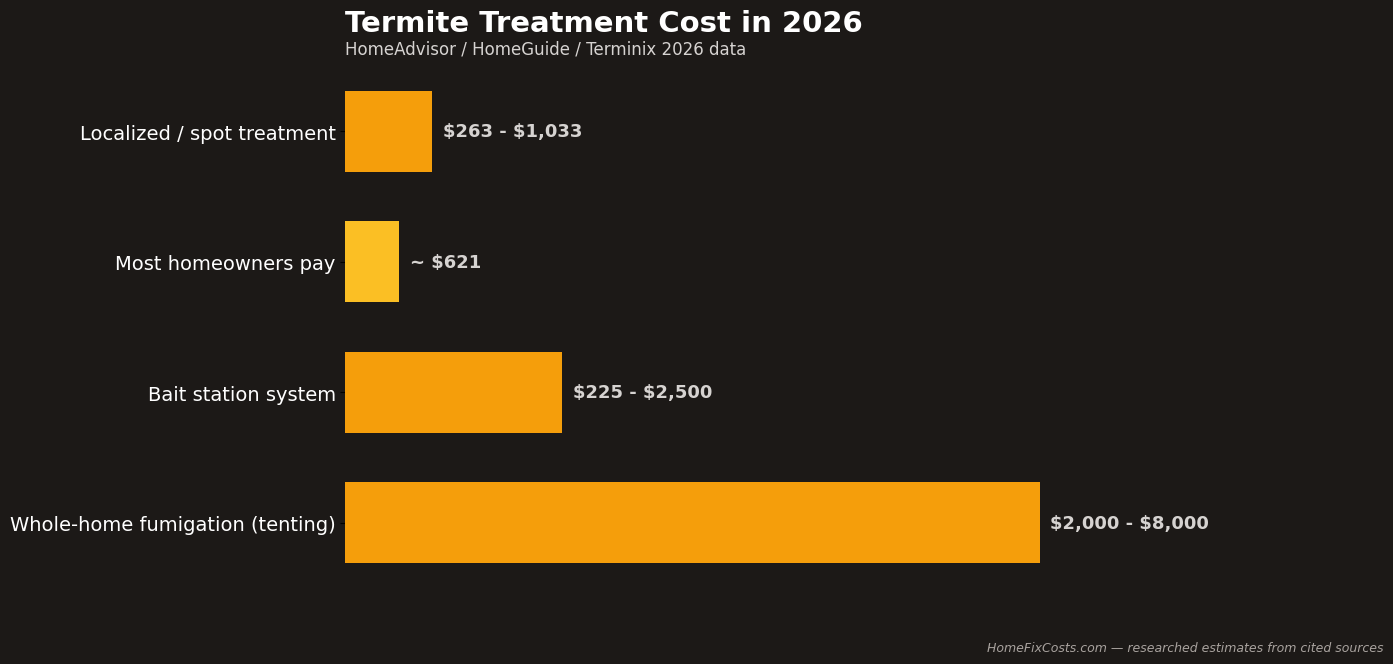
Termite treatment cost by type
| Treatment | Typical 2026 cost | Best for |
|---|---|---|
| Localized / spot treatment | $263 – $1,033 (avg $621) | Caught-early subterranean activity |
| Liquid barrier (perimeter) | $1,000 – $2,500 | Active subterranean colonies |
| Bait station system | $225 – $2,500 + monitoring | Ongoing prevention + elimination |
| Whole-home fumigation | $2,000 – $8,000 | Widespread drywood termites |
| Annual inspection | $75 – $150 (often free) | Everyone in termite states |
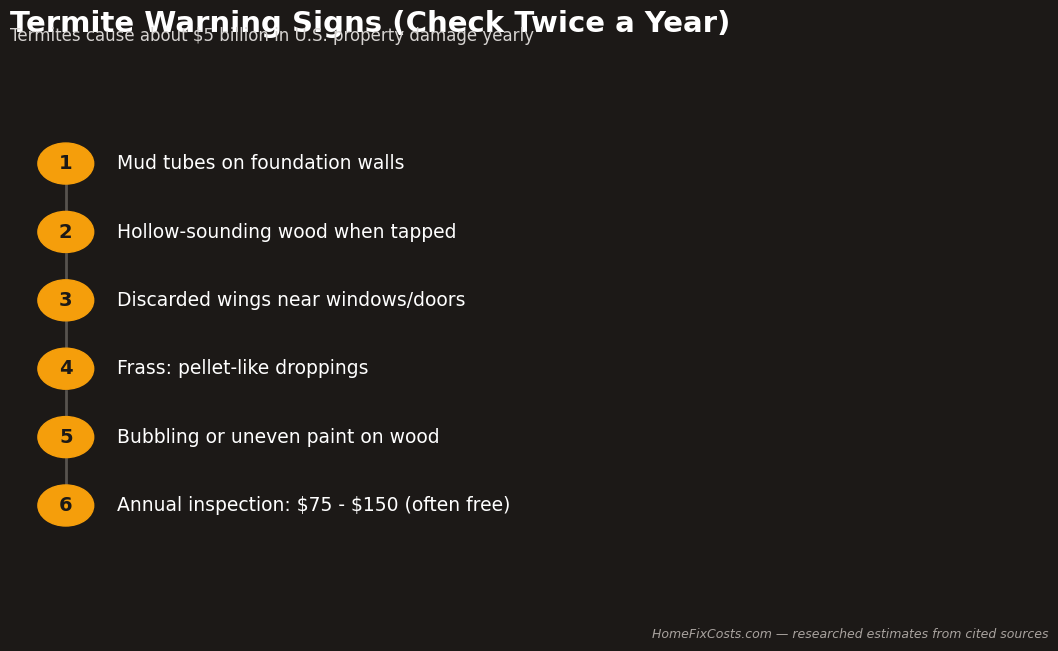
The signs, before the bill
Mud tubes climbing foundation walls, wood that sounds hollow when tapped, discarded wings on windowsills after spring swarms, pellet-like frass under wooden members, bubbling paint. Termites cause roughly $5 billion in U.S. property damage yearly — and homeowners insurance treats it as preventable maintenance, meaning the damage is on you. That asymmetry makes the $75-$150 annual inspection the best-value line in home ownership.
Subterranean vs. drywood (why quotes differ wildly)
Subterranean termites (most of the U.S.) nest in soil and enter through foundations — treated with liquid barriers or baits from outside. Drywood termites (Gulf Coast, California, Southwest) live INSIDE the wood — spot treatments handle isolated colonies, widespread infestation means tenting. A company quoting fumigation for subterranean termites, or spot sprays for widespread drywood, is quoting the wrong tool.
Bond or no bond?
Annual “termite bonds” ($300-$500/yr) bundle inspection plus retreatment guarantees, sometimes damage-repair riders. Worth it in high-pressure states (the Southeast especially) and after a treatment; read whether the bond covers RE-treatment only or also REPAIRS — the difference is thousands. Structural wood damage also changes other math: termite-eaten roof framing shifts the repair-vs-replace decision.
Official resources & free help
- Pesticide safety & hiring guidance: EPA.gov/safepestcontrol
- Questions about any pesticide product: NPIC (Oregon State + EPA) 1-800-858-7378 · npic.orst.edu
- Verify applicator licensing: your state department of agriculture pesticide board
- Biology & prevention: your state university extension (search “[state] extension termites”)
FAQ
Can I treat termites myself?
A small visible drywood colony: sometimes. Subterranean colonies: no — barrier and bait placement is precision work, and partial treatments teach the colony to route around you.
How long does treatment last?
Liquid barriers: 5-10 years. Baits: as long as monitored. Fumigation kills what is present but does not prevent re-entry — pair it with prevention.
Do termites mean structural ruin?
Usually not — most catches happen years before structural risk. An inspector can distinguish cosmetic galleries from members needing reinforcement.
Prices on this page are researched estimates compiled from the cited sources; your local costs will vary with market, access and scope. Always get multiple written quotes from licensed professionals before hiring.