Last updated: July 18, 2026 · Prices reviewed quarterly
Most homeowners pay $1,500 to $4,500 to repair a slab leak, with the national average around $2,300 (HomeGuide, Angi) once detection and concrete access are included. A simple reroute can start near $600, while a whole-home epoxy lining or repipe can climb to $8,000–$10,800 or more. Here is the honest part: the pipe itself is rarely the costly bit — reaching it through the slab is. Below are real 2026 prices by repair method, why your insurance may pay for the water damage but not the pipe, and how to decide whether to spot-fix, reroute, or repipe.
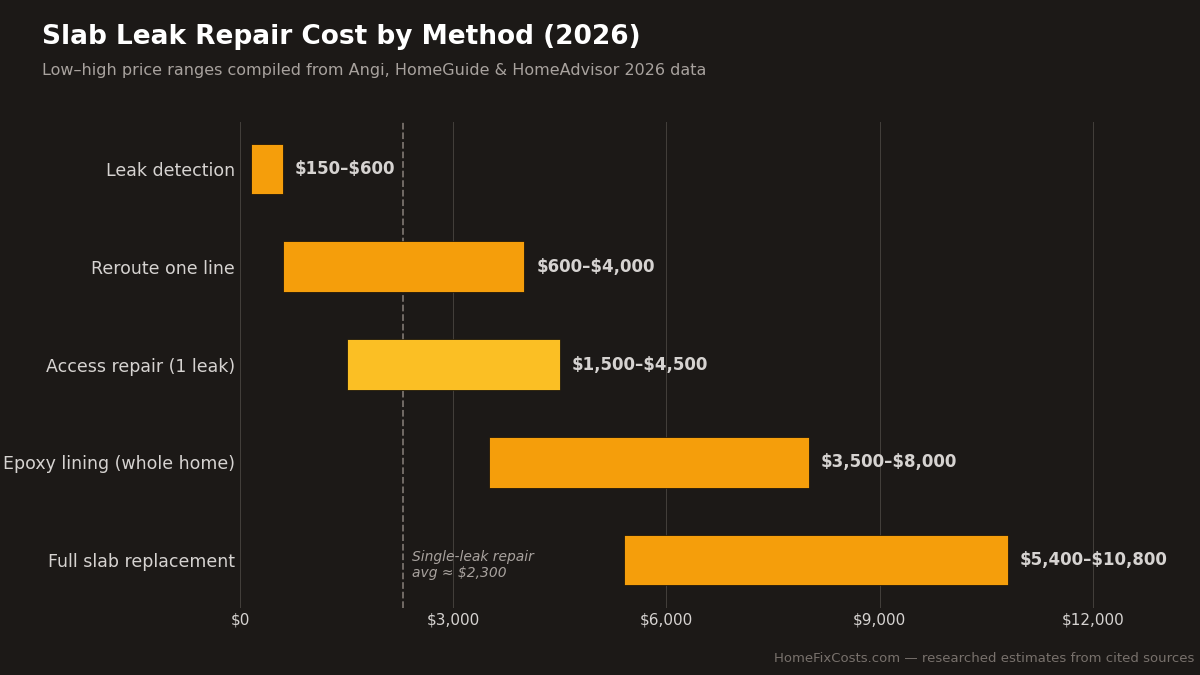
| Repair approach | Typical 2026 cost | When it is used |
|---|---|---|
| Leak detection (locating it) | $150–$600 | Always first — acoustic, thermal, camera |
| Access / spot repair (1 leak) | $1,500–$4,500 | Open floor, break slab, fix the pipe |
| Reroute one line | $600–$4,000 | Abandon the bad line, run new pipe overhead |
| Epoxy pipe lining (whole home) | $3,500–$8,000 | Trenchless; cure a coat inside the pipes |
| Full repipe / slab replacement | $5,400–$10,800+ | Widespread corrosion or multiple leaks |
What a Slab Leak Is (and Why It Costs So Much)
A slab leak is a water or drain line that has failed underneath the concrete foundation your house sits on. Because the pipe is buried in or below the slab, a plumber has to pinpoint it, then break through concrete — and often flooring — to reach it. That access work, not the short section of copper, is what drives the bill.
Two numbers frame the whole project: detection runs $150 to $600 (HomeGuide), and the repair itself averages about $2,300 for a single, accessible leak (Angi). Multiple leaks or a corroding system push you toward rerouting or a full repipe instead.
Signs You Have a Slab Leak
Catching a slab leak early is the single biggest way to keep the cost down. Watch for:
- A water bill that jumps for no clear reason
- The sound of running water when every fixture is off
- A warm or hot spot on the floor (a hot-water line leak)
- Damp carpet, buckling wood, or cracked tile at floor level
- A noticeable drop in water pressure
- Musty smells or mold along the baseboards
Any one of these is worth a $150–$600 detection visit. Ignored for months, a slab leak can undermine the foundation and breed hidden mold under your flooring — see our guide to mold removal after water damage.
What Slab Leak Repair Costs by Method (2026)
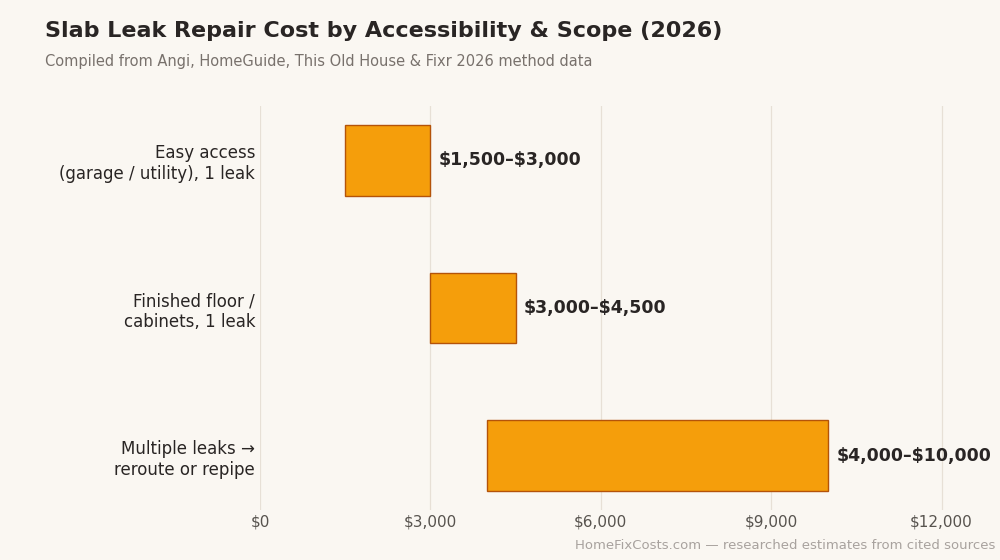
Your final price depends on how the plumber reaches and fixes the leak. These are the common approaches, cheapest to most involved:
- Leak detection — $150–$600. Acoustic listening, thermal imaging, or a camera pinpoints the leak so no one jackhammers the wrong spot (Fixr, HomeGuide).
- Access (spot) repair — $1,500–$4,500. The plumber opens the floor, breaks through the slab, and repairs the bad section. Accessibility is everything: a leak in the garage costs far less than one under a kitchen island (Angi, This Old House).
- Reroute one line — $600–$4,000. Instead of fixing the buried pipe, the plumber abandons it and runs a new line through walls or the attic. Common when a single line keeps failing (Angi, HomeGuide).
- Epoxy pipe lining — $3,500–$8,000 for a whole home, or roughly $80–$250 per linear foot. A trenchless coat cures inside the existing pipes, so there is little or no digging (HomeGuide).
- Full repipe or slab replacement — $5,400–$10,800+. For widespread corrosion or several leaks, replacing the plumbing in PEX or copper often beats paying for repeated spot repairs. Compare our house repipe cost guide.
Does Homeowners Insurance Cover a Slab Leak?
Usually only in part. A standard HO-3 policy typically pays for the sudden, accidental water damage a slab leak causes — soaked flooring, drywall, and belongings — but it often will not pay for the pipe repair itself, or for tearing out and replacing the slab to reach it (Allstate, Insuranceopedia).
What tends to be excluded: leaks from gradual corrosion, wear and tear, or poor maintenance. Document everything with photos and dates, and if a fair claim is denied, your state insurance department (found through the NAIC) can review it. For the water-damage side of the bill, see does homeowners insurance cover water damage.
Repair, Reroute, or Repipe?
- Spot-repair when it is a single leak, the pipes are otherwise sound, and access is easy.
- Reroute when one line keeps failing but the rest of the system is fine — it avoids future slab intrusion.
- Repipe when you have multiple leaks, aging copper, or hard, acidic water that will keep corroding pipes. It costs more up front but ends the cycle.
Slab and sewer work often overlap under the same foundation — our sewer line replacement cost guide covers the other big under-house pipe project.
When to Call a Pro (and What to Ask)
Slab leaks are not a DIY job — detection gear and concrete work call for a licensed plumber. But you can still control the cost by shopping smart:
- Get 2–3 written quotes that break out detection, repair, and floor restoration as separate line items.
- Ask whether a reroute would be cheaper than breaking the slab.
- Confirm the plumber is licensed and carries liability insurance.
- Ask who patches the concrete and flooring afterward — and whether that is in the quote.
How to Prevent the Next Slab Leak
- Keep water pressure at 40–60 psi; a $10 gauge tells you if it is too high.
- If you have old copper and hard water, ask a plumber about a whole-home water softener.
- Act on the first warm spot or bill spike. Early detection costs a few hundred dollars; a foundation and mold repair costs thousands.
Official resources & free help
- EPA WaterSense — epa.gov/watersense: how to find and fix hidden household leaks before they waste hundreds of gallons.
- FEMA Disaster Assistance — disasterassistance.gov or 1-800-621-3362: help if your water damage is tied to a federally declared disaster.
- FTC Consumer Advice — consumer.ftc.gov, report problems at reportfraud.ftc.gov or 1-877-382-4357: hiring a licensed plumber and avoiding overcharging.
- NAIC / your state insurance department — naic.org: consumer help and where to dispute a denied slab-leak claim.
- 211 — dial 2-1-1 or visit 211.org: connects lower-income, elderly, and disabled homeowners to local home-repair assistance.
Frequently Asked Questions
How much does it cost to fix a slab leak?
Most single-leak repairs run $1,500 to $4,500, averaging about $2,300 once detection and concrete access are included (HomeGuide, Angi). Rerouting a line runs $600–$4,000, while a whole-home epoxy lining or repipe reaches $3,500–$10,800.
Does homeowners insurance cover slab leak repair?
Often only the resulting water damage. Most policies pay to dry and rebuild soaked floors and walls after a sudden leak, but exclude the pipe repair and slab tear-out themselves, and deny leaks caused by age or corrosion (Allstate, Insuranceopedia).
Can a slab leak be fixed without breaking the concrete?
Sometimes. Trenchless epoxy pipe lining ($3,500–$8,000 whole-home) coats pipes from the inside, and rerouting ($600–$4,000) runs a new line overhead — both avoid jackhammering the slab (Angi, HomeGuide).
How do plumbers find a slab leak?
With acoustic listening devices, thermal imaging, and pressure tests, plus a camera to confirm the spot. Detection alone runs $150–$600 and prevents needless demolition (Fixr, HomeGuide).
Is a slab leak an emergency?
It is usually not a burst-pipe flood, but it does not fix itself. Left alone, it wastes water, spikes your bill, undermines the foundation, and grows mold. The longer it runs, the more you pay to repair the damage.
Should I repair or repipe for a slab leak?
Repair a single leak when the rest of your pipes are sound; repipe when you have had multiple leaks or your copper is corroding. If repair costs approach a large share of a repipe, the repipe usually pays off — see our house repipe cost guide.
Prices on this page are researched estimates compiled from the cited sources; your local costs will vary with market, access and scope. Always get multiple written quotes from licensed professionals before hiring.