Last updated: August 14, 2026 · Prices reviewed quarterly
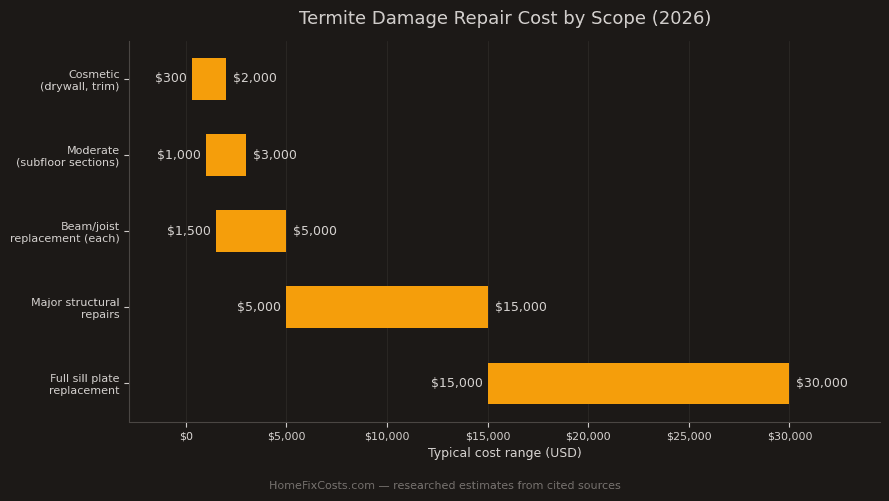
Repairing termite damage costs $1,000 to $10,000 for most homes, with a national average around $3,000, per Angi and HomeGuide 2026 data. Treatment kills the colony, but it does nothing for the wood the termites already ate. Cosmetic fixes like drywall patches run a few hundred dollars, while structural work on joists, beams or a sill plate can climb past $15,000. The table below shows what each level of damage actually costs, so you can judge a contractor bid before you sign it.
Termite Damage Repair Cost by Scope
| Repair scope | Typical cost range | Source |
|---|---|---|
| Cosmetic (drywall patches, trim, paint) | $300 – $2,000 | Angi / HomeGuide 2026 data |
| Moderate (subfloor sections, non-structural wood) | $1,000 – $3,000 | HomeGuide 2026 data |
| Support beam or joist replacement (each) | $1,500 – $5,000 | HomeGuide / Angi 2026 data |
| Major structural repairs | $5,000 – $15,000+ | Angi / HomeGuide 2026 data |
| Full sill plate replacement | $15,000 – $30,000 | HomeAdvisor / Bob Vila 2026 data |
Signs the Damage Goes Beyond the Surface
Subterranean termites eat wood from the inside out, so the surface often looks fine until you press on it. Tap suspect framing with a screwdriver handle: solid wood sounds sharp, eaten wood sounds hollow and papery. Mud tubes on the foundation, blistered paint, pinholes in drywall and doors that suddenly stick are the other classic tells.
The location matters more than the amount. A chewed baseboard is a $60 to $200 drywall-and-trim job, per HomeGuide. The same colony reaching a sill plate — the beam that sits on your foundation and carries the walls — puts you in five-figure territory. Floors that bounce or slope toward one corner suggest joists have lost strength and deserve a professional look.
Moisture is almost always part of the story, since subterranean termites need damp wood to thrive. A slow plumbing drip, poor drainage or a roof leak that kept framing wet is often what invited the colony in the first place. Fix the water problem or the new wood you pay for becomes the next buffet.
What It Costs to Fix, Piece by Piece
Contractors price termite repairs by the member being replaced, not by the square foot. Per Angi 2026 data, repairing a damaged floor joist runs $100 to $1,000, while fully replacing one costs $1,000 to $2,000 with labor. Subfloor replacement lands at $3 to $10 per square foot — roughly $1,600 for an average room, per HomeAdvisor.
Sill plates are the expensive one. Because the house has to be supported while the beam is cut out, contractors charge $100 to $120 per linear foot, and whole-perimeter jobs average $15,000 to $30,000, per Bob Vila and HomeAdvisor 2026 figures. Very severe cases involving multiple load-bearing walls can reach $45,000, per Forbes Home.
Two other line items catch homeowners off guard. First, a structural engineer’s assessment costs $350 to $900, per Angi — worth it on any bid over $5,000, because the engineer works for you, not the contractor. Second, the repair quote does not include killing the colony: termite treatment adds $225 to $2,500 depending on the method, and reputable contractors will not warranty new wood in an untreated house.
When to Call a Pro (and Which Pro)
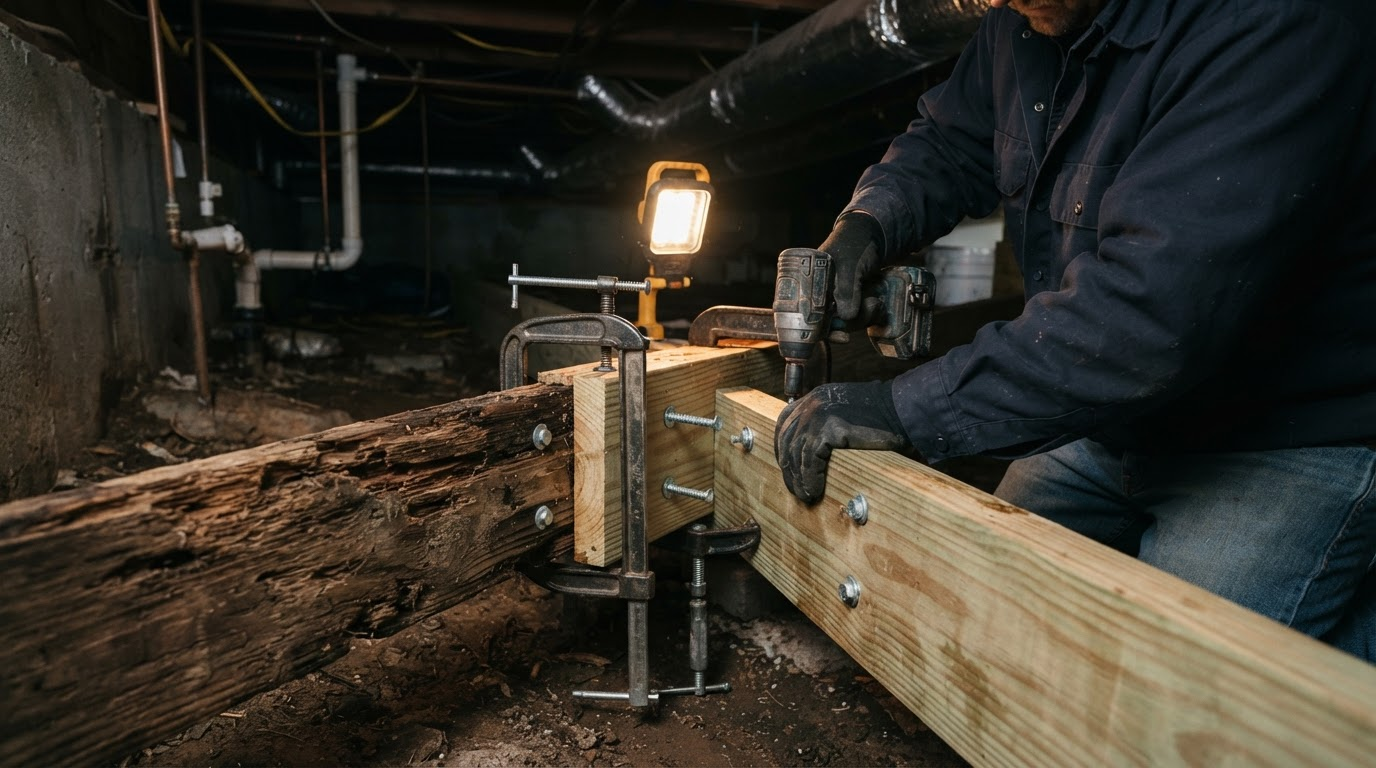
Order matters here. Call a licensed pest control company first to confirm the termites are dead or get them treated — a general exterminator can identify the species and the extent of activity. For anything touching joists, beams, posts or the sill plate, you want a general contractor experienced in structural repair, and ideally an independent engineer’s report defining the scope.
Handy homeowners can reasonably patch drywall, replace trim and swap a damaged non-structural stud. Sistering joists, jacking floors and anything load-bearing is not DIY territory: done wrong, it cracks drywall and plumbing above, and most building departments require a permit for structural framing work anyway.
Get at least three written bids that separate demolition, lumber, labor and permits. A vague “termite repair — $12,000” line is how people overpay; an itemized bid lets you compare against the ranges above.
Will Insurance or a Termite Bond Pay?
Plan on paying out of pocket. Homeowners insurance treats termites as preventable maintenance, so damage is excluded on standard policies, per Nationwide and U.S. News. The narrow exceptions are sudden collapse from hidden damage or a covered peril the termites trigger, like chewed wiring causing a fire.
A repair-type termite bond is the one product that does cover future damage. Per TermiteTreatmentPrice.com’s 2026 data, bonds run $150 to $500 per year after an initial treatment, and repair-grade bonds carry damage caps from $100,000 up. If you live in a heavy termite state, that annual fee is cheap compared to one joist replacement.
Prevention: The Cheapest Repair Is the Next One You Avoid
Keep wood and soil apart: 6 inches of clearance between siding and grade, no mulch piled against the foundation, no firewood stacked on the slab. Fix drips and grade water away from the house, since damp soil against the foundation is the main risk factor — the same conditions that lead to water damage restoration bills also feed termite colonies.
An annual professional inspection costs $50 to $280 and catches colonies before they reach structure. Compared to the $3,000 average repair, it is the best-odds money in this entire article.
Official resources & free help
- EPA — Termites: How to Identify and Control Them: epa.gov/safepestcontrol — federal guidance on treatments and hiring pest professionals
- National Pesticide Information Center (NPIC): npic.orst.edu — 1-800-858-7378 — free, science-based answers on termiticides and safety
- 211 (United Way): dial 211 — local home repair assistance programs for income-qualified homeowners
- USA.gov: usa.gov — find your state consumer protection office and contractor licensing board before hiring
Frequently asked questions
Can a house with termite damage be saved?
Almost always. Infestations rarely make a home structurally unsound, per Angi — termites eat slowly, and most damage is caught while it is still repairable wood replacement rather than a rebuild. The exception is damage ignored for many years across multiple load-bearing areas.
How do you know if termite damage is structural?
Structural damage means termites reached support beams, joists, studs, the subfloor or the sill plate. Sagging or bouncy floors, cracked drywall lines and sticking doors are the warning signs. A structural inspection, about $530 on average per Angi, gives you a definitive answer and a repair scope.
Does homeowners insurance cover termite damage?
No, not on a standard policy — insurers classify termites as preventable, per Nationwide and GEICO. Rare exceptions exist for sudden collapse or a covered peril caused by the damage. A repair-type termite bond from a pest company is the product that actually covers future damage.
Is it worth buying a house with termite damage?
It can be, if the colony is dead, the damage is documented and the price reflects the repair bill. Insist on a wood-destroying organism (WDO) inspection, a structural engineer’s report for any framing damage, and quotes in hand before closing — then negotiate those numbers off the price.
How much termite damage is too much?
There is no fixed threshold, but repair bids above 10 to 15 percent of the home’s value — typically extensive sill plate and multi-wall framing damage — are where buyers walk away and owners weigh remodeling instead. Below that, repair almost always beats selling at a damage discount.
Prices on this page are researched estimates compiled from the cited sources; your local costs will vary with market, access and scope. Always get multiple written quotes from licensed professionals before hiring.