Last updated: July 7, 2026 · Prices reviewed quarterly
Honest answer for 2026: solar is worth it for homeowners with high electric rates, good sun, decent net metering and a young roof — and no longer automatic for everyone else. With the federal credit gone, typical paybacks stretched from 7-10 years to 10-16 years. Here is the 6-step check that replaces the sales pitch.
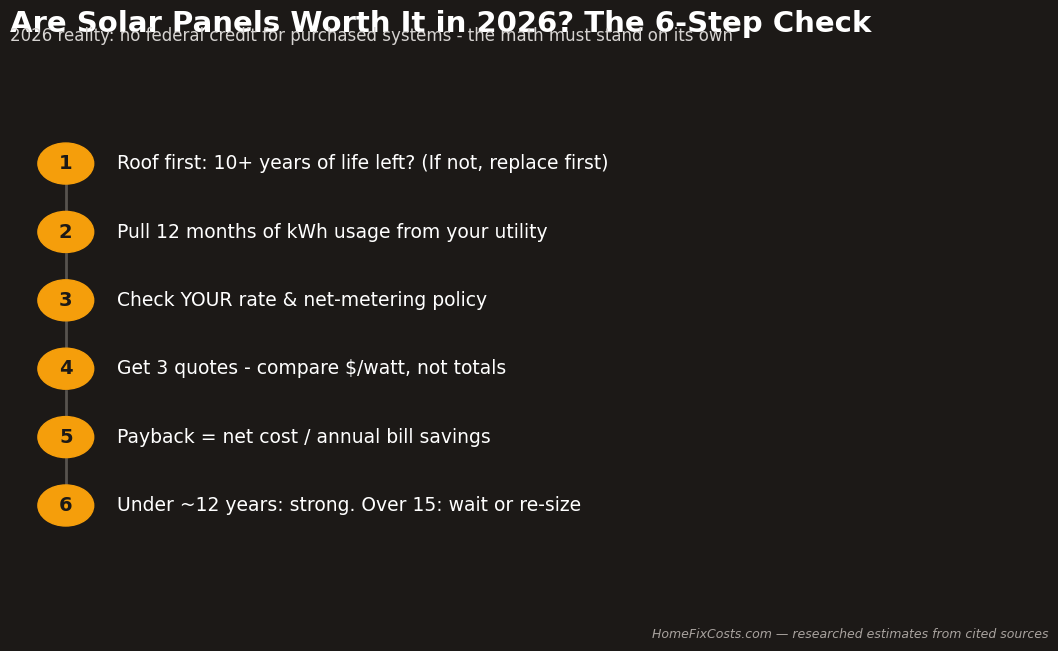
Are solar panels worth it? The 6-step check
1) Roof age: under 10 years of life left? Replace first or skip. 2) Pull 12 months of kWh from your utility account. 3) Your rate and net-metering policy: the biggest variable — full retail net metering is gold; avoided-cost buyback changes everything. 4) Three quotes compared on $/watt (current prices). 5) Payback = net cost ÷ first-year savings. 6) Verdict: under ~12 years is strong; over 15, wait, re-size, or fix consumption first.
Worked example, both directions
Case A — works: Phoenix home, 14,000 kWh/yr at $0.16/kWh with decent export rates. An 8 kW system at $22,000 offsets ~$1,900/yr → ~11.6-year payback, then 15+ years of mostly-free power. Case B — does not: Seattle home, 8,000 kWh/yr at $0.11/kWh, weak winter sun. A 6 kW system at $17,000 saves ~$800/yr → 21-year payback — longer than the inverter lives. Same panels, opposite verdicts: geography and rates decide.
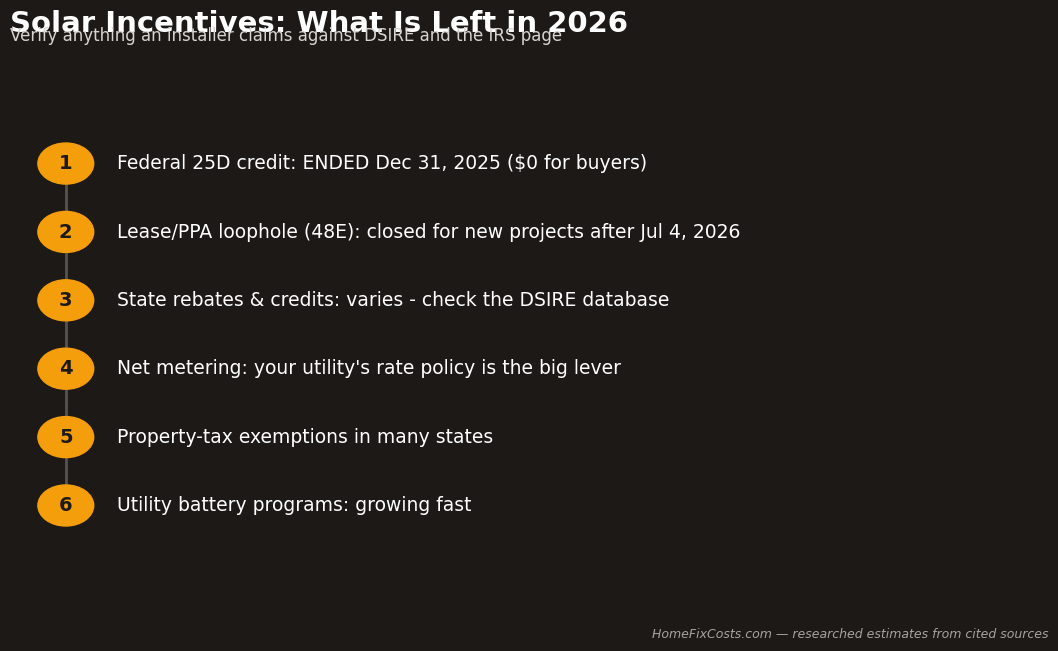
What still tilts the math your way
State incentives survive in some markets (New York, Massachusetts, Illinois among them — verify on DSIRE, not a sales slide). Property-tax exemptions keep assessments flat in many states. Some utilities pay for battery grid programs. And electricity inflation shortens payback retroactively with every rate hike. Against you: shading, east/west orientation penalties of 10-25%, and HOA friction (most states protect solar access — check yours).
The resale angle
OWNED systems add value — research including Lawrence Berkeley National Laboratory’s puts premiums around $10,000-$15,000 (~4%) for typical systems. LEASED systems are the opposite: an assumable contract that complicates closings. Selling soon? Own it or skip it.
Official resources & free help
- Free production model for your address: NREL PVWatts
- Incentives that actually exist right now: DSIRE
- Net metering policy: your state public utilities commission
- Official credit status: IRS.gov · complaints: FTC
FAQ
My quote shows a 6-year payback. Believe it?
Only if the arithmetic survives YOUR bills: net cost ÷ (your kWh × your offset rate). Six-year claims in 2026 usually smuggle in phantom credits or aggressive rate-inflation assumptions.
Is DIY solar viable?
Ground-mount kits for the electrically skilled, maybe — but permitting, interconnection and warranties make rooftop DIY false economy for most.
How much do panels degrade?
Modern warranties promise ~87-92% output at year 25 (0.25-0.5%/yr). The real replacement item is the inverter: budget $1,500-$3,000 around year 12-15.
Prices on this page are researched estimates compiled from the cited sources; your local costs will vary with market, access and scope. Always get multiple written quotes from licensed professionals before hiring.